If you’re trying to understand how simulated crypto trading works, here’s the simple version: it lets traders engage with real market movement in a structured trading environment, without directly buying and holding crypto in a personal wallet.
That matters because crypto is fast, volatile, and not exactly known for being forgiving to beginners. One bad decision, one oversized position, one emotional revenge trade, and suddenly your “learning experience” gets very expensive.
Simulated crypto trading gives traders a way to focus on what actually matters, strategy, execution, discipline, and risk management.
What is simulated crypto trading?
Simulated crypto trading is a model where traders place trades based on live market conditions inside a platform with defined rules, objectives, and risk limits.
Instead of simply buying coins and hoping for the best, traders are assessed on how they perform. That usually means showing consistency, following risk parameters, and proving they can trade with a repeatable process.
In other words, it is not about getting lucky once. It is about showing you can actually trade without falling apart the second the chart gets ugly.
How simulated crypto trading works in practice
At a practical level, simulated crypto trading usually looks like this:
- A trader chooses a challenge or account type.
- The trader enters a structured environment with specific rules.
- They place trades based on real crypto market price movement.
- Their performance is measured against targets and risk limits.
- If they perform well within the rules, they may unlock the next stage or qualify for rewards.
That structure is a big part of the appeal. It gives traders a framework, not just a chart and a dream.
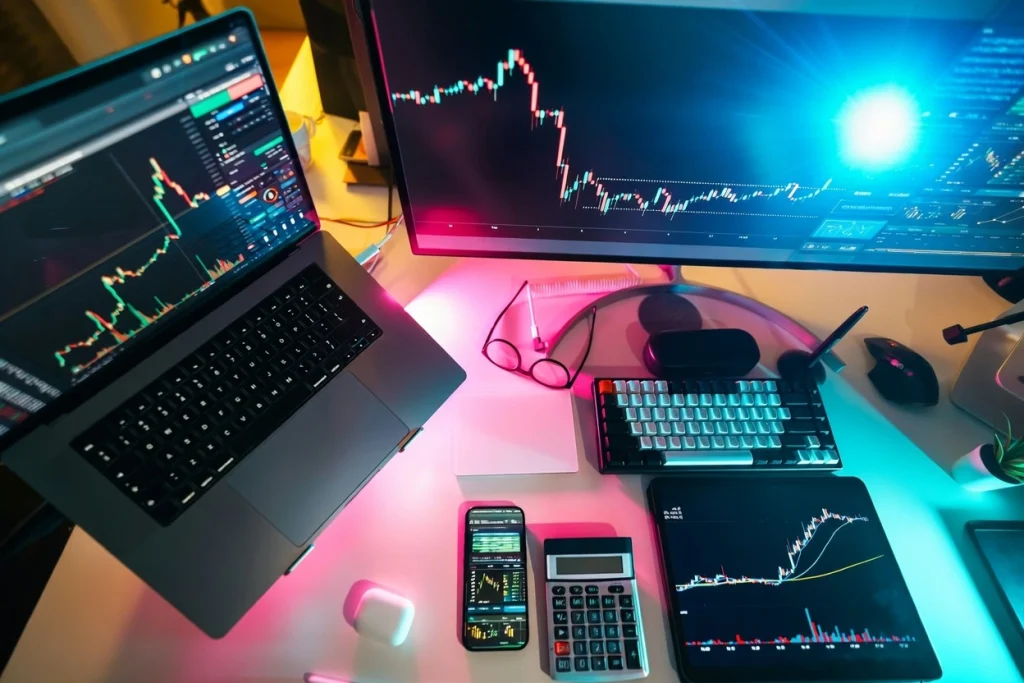
Why traders use simulated crypto trading
There are a few reasons this model appeals to both newer and more experienced traders.
It creates structure.
A lot of traders do not fail because they lack opinions. They fail because they lack structure. Simulated trading introduces rules, targets, and accountability.
It puts discipline front and center.
Anyone can feel like a genius in a random pump. The harder part is managing risk, staying consistent, and avoiding self-destruction when volatility kicks in.
It reflects real market behavior.
Crypto markets move fast, and simulated trading is built around that reality. Traders still need to read price action, manage positions, and respond to market conditions.
It helps traders build process.
The goal is not just participation. The goal is building habits that can actually survive a volatile market.
How simulated crypto trading is different from buying crypto normally
If you buy crypto on an exchange, you are usually just purchasing the asset directly and managing everything yourself.
With simulated crypto trading, the focus shifts from ownership to performance.
That means the core question becomes less “Do I own Bitcoin?” and more “Can I trade crypto well, consistently, and within risk limits?”
That difference matters. A lot.
How simulated crypto trading connects to crypto prop trading
Simulated crypto trading is closely tied to crypto prop trading. In a prop-style model, traders are typically evaluated on performance inside a challenge framework.
That is why understanding what crypto prop trading is matters if you are exploring this space. It also helps to understand how to start crypto trading with a process instead of pure chaos.
For traders who want a more structured path, simulated trading can feel a lot more useful than jumping straight into raw market exposure with no plan and too much confidence.
Is simulated crypto trading good for beginners?
It can be, especially for traders who want structure.
That said, beginners still need to respect the basics:
- Learn how crypto markets move
- Understand volatility
- Use risk management
- Avoid oversized trades
- Focus on consistency over hype
Simulated trading is not magic. It does not remove the need for skill, patience, or discipline. It just gives traders a more structured environment to build those things.

What skills matter most in simulated crypto trading?
The traders who usually perform best are not the loudest. They are the ones who can:
- Follow a plan
- Stay calm during volatility
- Avoid emotional trading
- Repeat good decisions consistently
That is the real edge in crypto. Not noise, not ego, not one lucky trade.
Final thoughts
If you’re wondering how simulated crypto trading works, the answer is simple: it gives traders a structured way to engage with live crypto market movement while being measured on discipline, consistency, and performance.
For a lot of traders, that is a smarter place to start. Crypto already brings enough chaos on its own. A little structure is not weakness, it is survival.
FAQ
Simulated crypto trading is a structured trading model where traders place trades based on live market conditions while operating within defined rules and risk limits.
No. Buying crypto is direct asset ownership. Simulated crypto trading is focused on trading performance, discipline, and risk management.
It can be, especially for beginners who want more structure and a clearer process for learning how to trade.
Yes. The trading environment is built around live crypto market conditions, which means traders still need to respond to real price action.
Consistency, discipline, risk management, and the ability to follow a plan matter more than hype or one good trade.